Running and Breast Motion: The Scientific Reason to Protect Your Bust

Many women love running to stay healthy, shape their bodies, and relieve stress. But did you know that while running, your breasts are constantly “bouncing”? If this movement isn’t properly supported, it can lead to discomfort, sagging, and even long-term damage. Today, let’s talk about the science behind breast motion during running and how a sports bra can protect your bust.
1. The Science of Breast Motion
Breasts have no muscles: Breasts are mainly composed of fat and mammary tissue, without muscular support, making them prone to bounce during exercise.
Bounce during running: Studies show that during running, breasts can move up and down by 7–10 cm or more, especially noticeable in women with larger breasts.
Multi-directional movement: Besides vertical movement, breasts also sway forward, backward, and sideways. Over time, uneven forces can stretch ligaments and cause sagging.
Tip: This is why even wearing regular underwear while running can feel uncomfortable or cause breast pain.
2. Breast Injury and the Role of Sports Bras
Ligament strain: The Cooper’s ligaments in the breasts can stretch due to repeated bouncing, leading to sagging.
Pain and discomfort: Excessive breast movement can cause soreness and negatively affect your running experience.
Sports bra function: Sports bras adhere closely to the bust, distribute pressure, and limit bounce, protecting ligaments and reducing discomfort.
Pro tip: Choosing the right sports bra can reduce breast movement by 50–70%, greatly improving comfort.
3.Which type of sports bra is best for running?
High support is crucial: Running is a high-impact activity, so a high-support sports bra (e.g: high-impact support plus size mesh racerback sports bra for women) is essential, especially for larger busts.
Panelled design: Wide shoulder straps and reinforced back panels help distribute weight and reduce shoulder and neck pressure.
Breathable, moisture-wicking fabric: Running makes you sweat, so choose quick-dry, breathable materials to stay comfortable and dry.
Proper fit matters: Too tight or too loose compromises support. Measure your bust and underbust to select the correct size.
4. How to Wear a Sports Bra Correctly
Adjust straps: Straps should be snug but not tight—avoid digging into your shoulders or slipping down.
Secure the band: The underbust band should sit flush against your ribcage to prevent bounce.
Putting it on: Pull it over your head or slide in with both hands, then adjust straps and band for a snug fit.
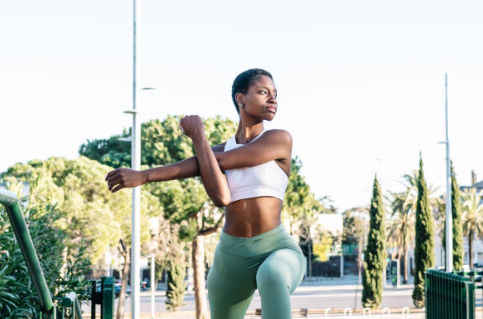
Tip: Do a simple chest stretch before running and then put on the sports bra for best results.
5. Extra Tips to Protect Your Bust While Running
Increase intensity gradually: Beginners shouldn’t start with long, fast runs—give your breasts time to adapt.
Hot and cold care: Use cold compresses after running to ease micro-injuries from bouncing; massage if needed.
Replace sports bras regularly: Bras lose elasticity over time; replace every 6–12 months to maintain support.
Skin care: Moisturize breast skin to maintain elasticity, helping slow down saggin.
Conclusion: Sports Bras Are More Than Protection—They’re Confidence
The right sports bra not only reduces pain and prevents sagging but also makes running easier and more fluid. Psychologically, it boosts confidence, letting you enjoy your workout.
The high-impact support plus size mesh racerback sports bra for women is perfect for high-intensity activities. With excellent support, it fits comfortably for gym sessions or casual outings—definitely worth trying.
A sports bra is a running woman’s “invisible shield.” Choosing the right one and wearing it properly is key to protecting your bust and enjoying a comfortable workout.