Which type of sports bra is more secure: front-fastening or back-fastening?

Standing in front of the gym mirror, you might find yourself debating the choice of a sports bra: the convenience of a front-closure bra or the classic support of a back-closure bra? Every stretch and jump tests the stability of this close-fitting garment. Which design is better suited for high-intensity training, or which is easier to put on and take off for everyday workouts? This article will comprehensively analyze the differences between front-closure and back-closure sports bras from three dimensions: ease of putting on and taking off, stability, and design structure.
considerations for ease of putting on and taking off
As sweat begins to build up during training, ease of putting on and taking off becomes an important factor. The design concept of the easy-wear gym bra aims to allow users to put it on quickly, thus saving warm-up time.
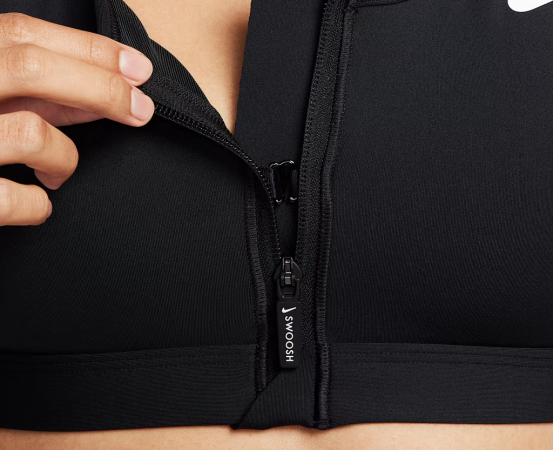
Front-fastening sports bras, with their buckles positioned at the chest, allow users to easily put on or take off their bras without raising their shoulders or twisting their bodies. This design is almost a lifesaver for those with limited shoulder mobility or who have just finished a high-intensity workout.
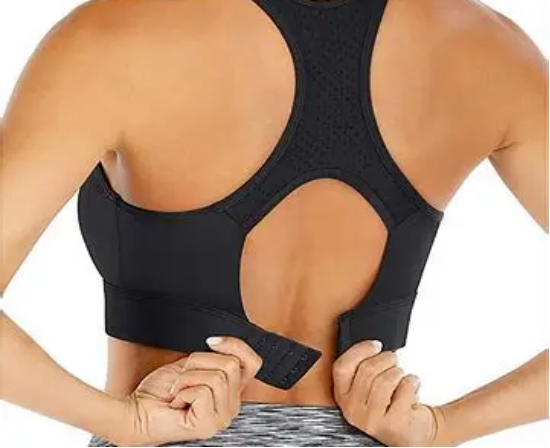
In contrast, back-closure sports bras require the arms to be wrapped behind the back to fasten, which can be slightly inconvenient when movement is limited. However, the advantage of the back-closure design is that it offers more adjustability, achieving a precise fit through multiple closure positions, keeping the chest stable during exercise.
Based on user feedback and fitness instructors’ experience, front-fastening styles are suitable for quick on and off and low- to medium-intensity training, while back-fastening styles have an advantage in support and fit, especially in high-impact exercises such as strength training or running.
Stability and Support Analysis
Stability is a core metric for secure-fit workout bras. During exercise, chest movement not only affects performance but can also cause neck and shoulder fatigue or discomfort.
Front-fastening sports bras typically rely on wide shoulder straps and an elasticated bust for support. While the front-mounted buckle increases ease of putting on and taking off, it can experience significant tension during vigorous stretching or jumping movements. If the fabric or buckle is not strong enough, it may shift slightly.
Back-closure sports bras distribute support evenly across the chest area through multi-segment closures and elastic bands at the back, reducing swaying. Especially during high-impact training requiring full coverage support, the back-closure design typically provides a more secure fit.
In fact, multiple studies on sports equipment show that optimizing support depends not only on the fastening method but also on the overall cut, fabric elasticity, and shoulder strap width. When choosing between a front-closure sports bra and a back-closure bra, users need to weigh their training intensity and chest shape.
Differences in design structure and materials
Besides the fastening position, the material and structural design of a bra also directly affect stability and comfort.
- Fabric elasticity and moisture wicking : High-quality fabrics can quickly wick away sweat while ensuring a good fit, reducing slippage or a feeling of restriction during exercise.
- Shoulder strap width and pressure distribution: Front-fastening sports bras usually have wider shoulder straps to compensate for localized pressure from the buckle position; back-fastening bras can achieve a more balanced pressure distribution through multiple buckle positions on the back.
- Cutting and full-coverage design: Full-coverage or three-dimensional cutting design can keep the chest stable under different movements and reduce the impact of swaying on the body.
These factors combined result in different user experiences for sports bras with front-fastening and back-fastening designs. For high-impact sports, back-fastening bras often provide a more secure fit, while for low- to moderate-intensity activities such as everyday fitness or yoga, front-fastening bras offer the advantage in terms of convenience.
User experience and maintenance suggestions
Wearing a comfortable and stable sports bra not only affects the training experience but also its longevity. Here are some practical tips:
- Trying on and adjusting: Especially for back-closure bras, multiple clasp positions allow for fine-tuning of the fit, ensuring stability and comfort during training.
- Matching training clothes: Pair with a high-elasticity sports top or fitness vest to enhance support and improve sweat wicking.
- Cleaning and maintenance: Metal buckles with front or back buckles are easily corroded by sweat during high-intensity training. It is recommended to hand wash with warm water and air dry naturally to avoid mechanical drying from damaging the elasticity.
Proper wearing and maintenance strategies can ensure that easy-wear gym bras or back-fastening bras reach their optimal performance in terms of lifespan and workout experience.
Trends and Selection Recommendations
In recent years, the design trend of fitness bras has gradually shifted from single function to multi-dimensional: front-closure bras have begun to incorporate reinforced structures and non-slip shoulder straps, while back-closure bras combine innovative materials to improve breathability and comfort.
- Hybrid design: Some brands are exploring hybrid solutions that combine the convenience of front buckles with the stability of back buckles, providing users with more flexible options.
- Smart fabrics: Moisture-wicking, temperature-regulating, and other technologies are gradually being incorporated into the design, allowing the bra to maintain a stable fit in various training environments.
- Diverse cuts: Customized cuts are available to suit different chest shapes and training needs, further optimizing support and comfort.
When choosing between front closure and back closure sports bras, you can weigh factors such as training type, chest shape, and ease of wearing and removing.
Explore more sports bra design concepts and styling strategies.